Category: How To
-
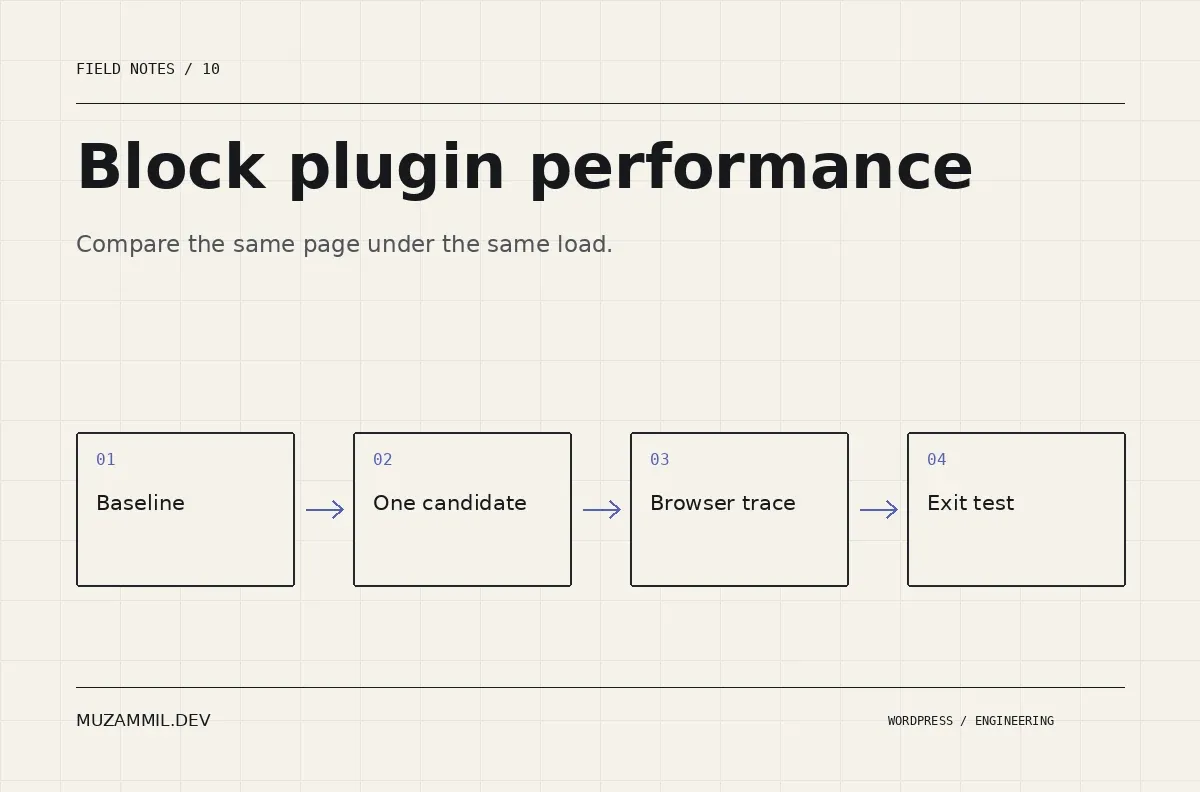
Block plugin performance: run a fair test before choosing a library
Test block plugin performance with a repeatable page, matched cache conditions and browser traces. Learn what to measure and how to compare fairly.
-
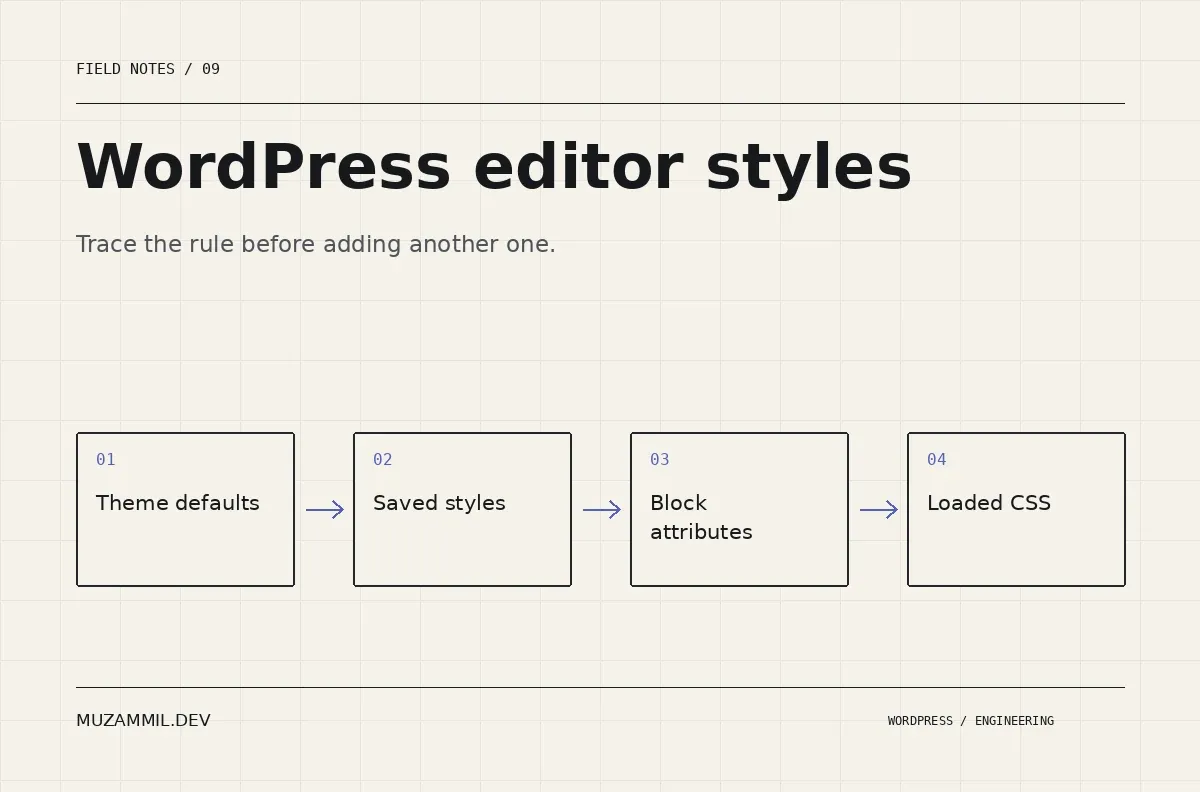
WordPress editor styles: why the canvas and frontend disagree
Debug WordPress editor styles by tracing theme.json, saved overrides, block attributes and iframe assets before adding more CSS patches.
-
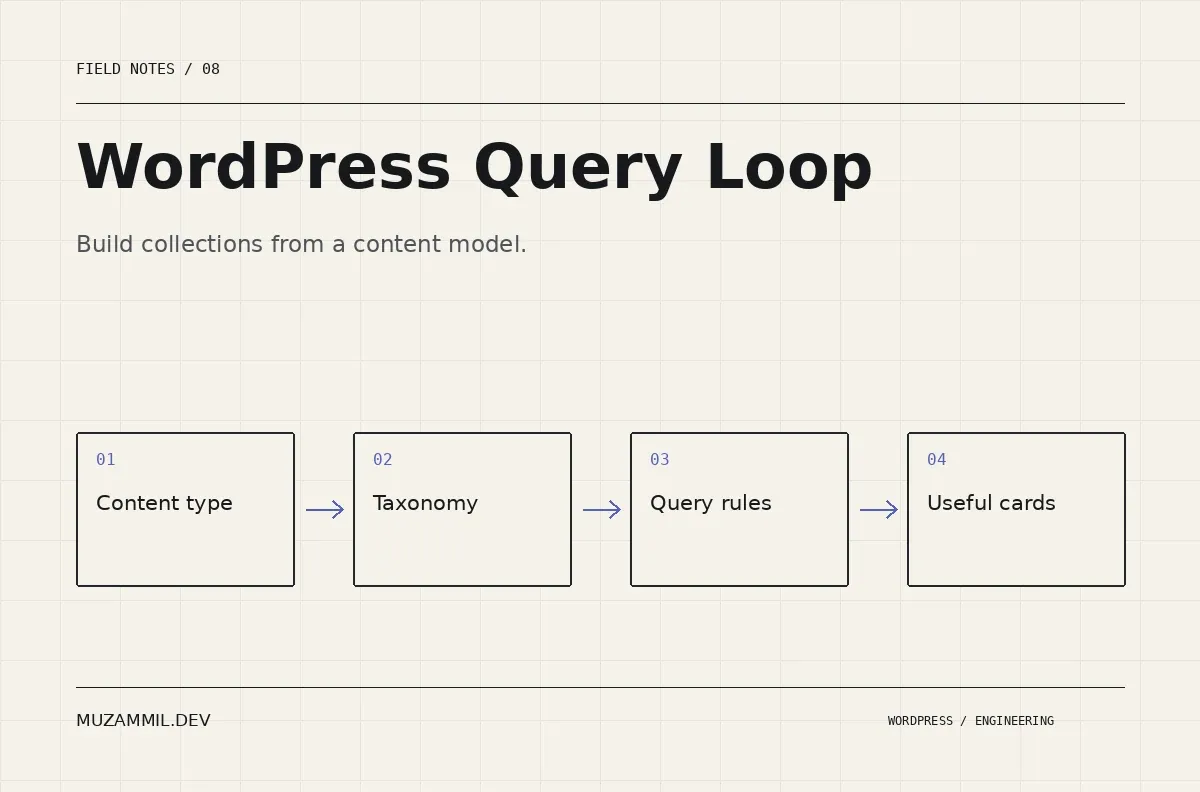
WordPress Query Loop: build a useful case-study library with blocks
Build a case-study library with the WordPress Query Loop. Plan taxonomy, readable cards, pagination and empty states before adding query extensions.
-
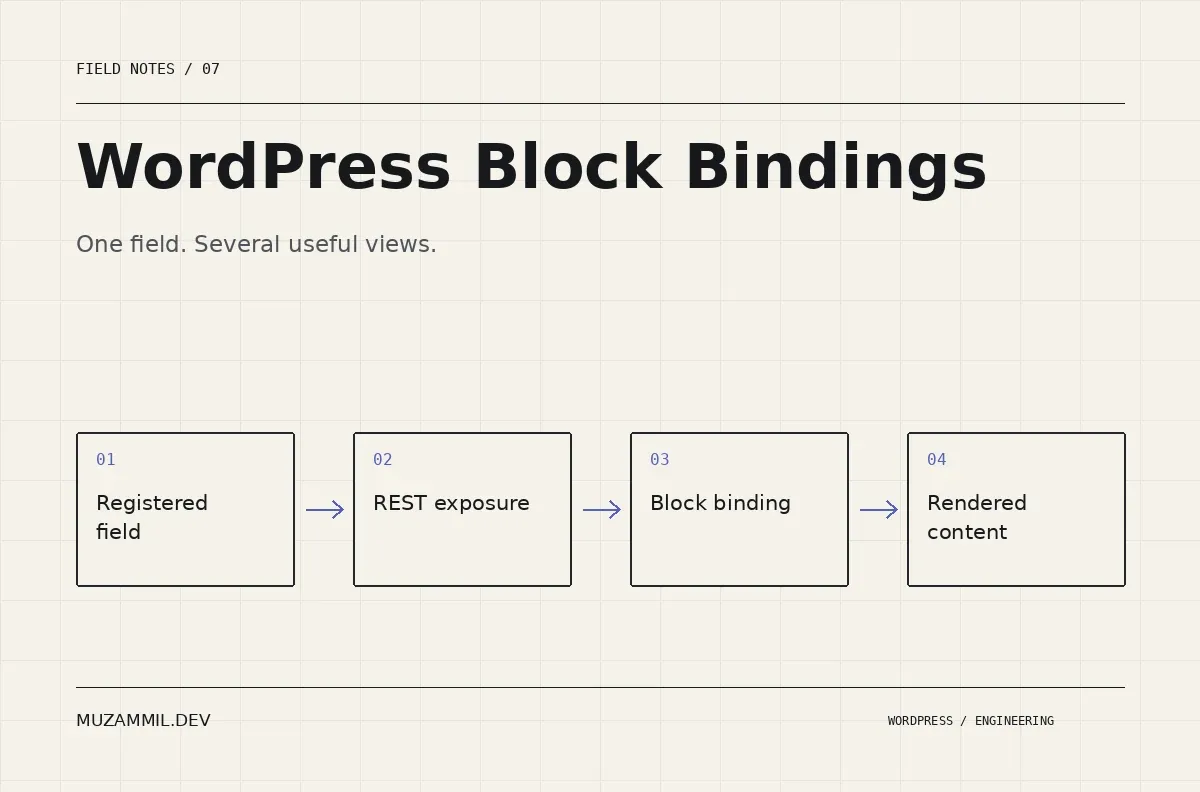
WordPress Block Bindings: connect custom fields to a reusable project card
Connect custom fields with WordPress Block Bindings, understand REST visibility, and test reusable project content without duplicating each value.
-
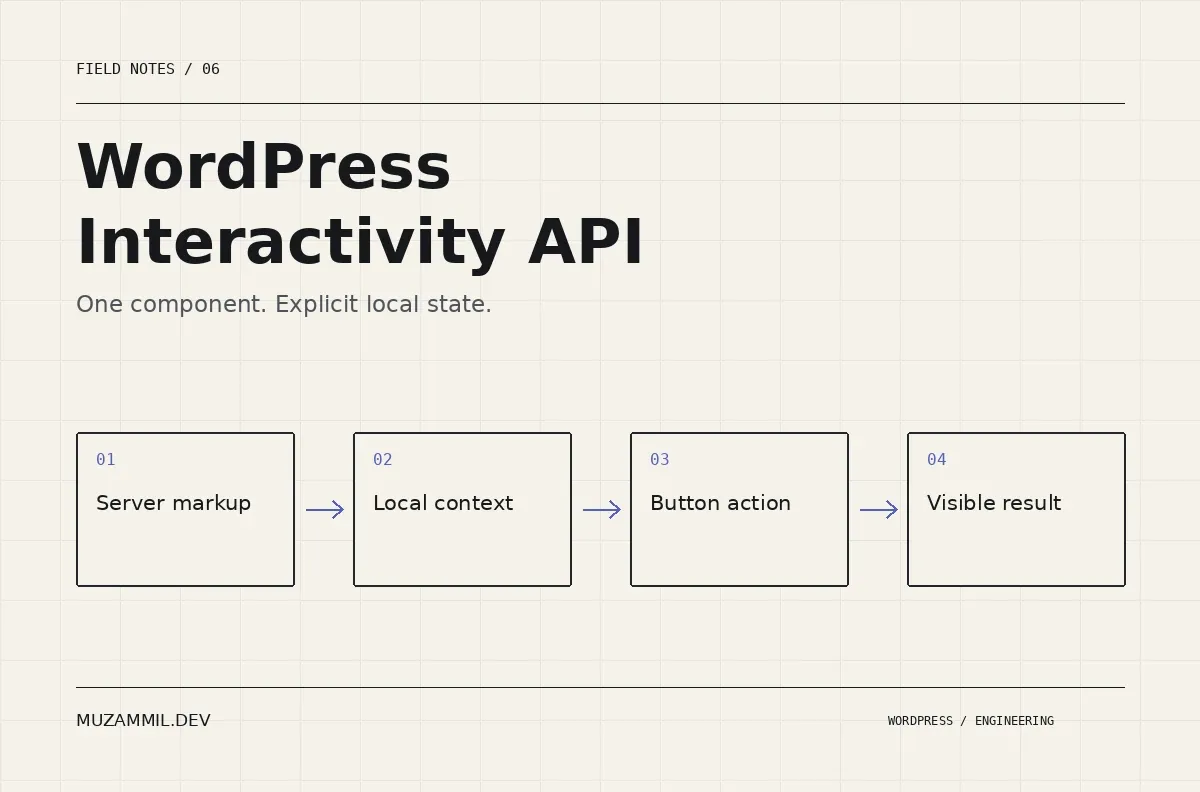
WordPress Interactivity API: build a disclosure without global click handlers
Use the WordPress Interactivity API to build a scoped disclosure block, with local state, accessible controls and a practical failure-testing plan.
-
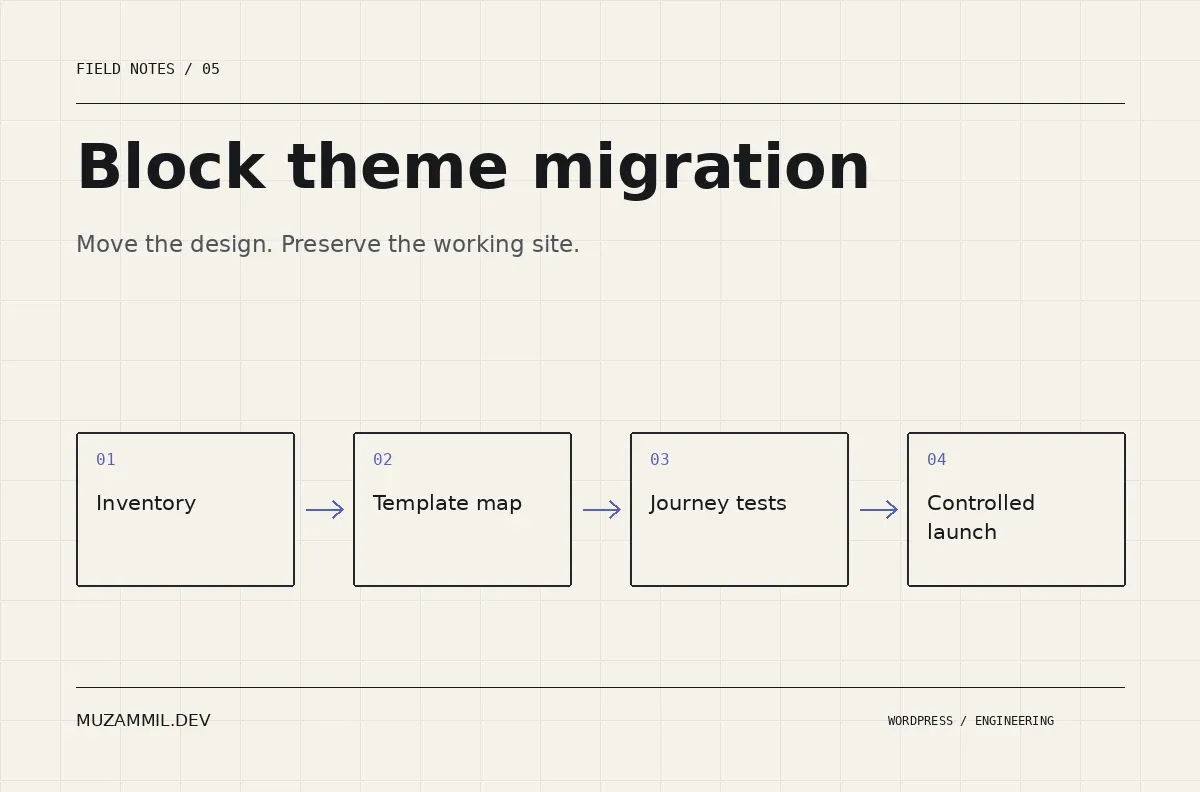
Block theme migration: redesign WordPress without losing the working site
Plan a block theme migration around templates, URLs, forms and content ownership, with staging checks and a rollback that protects live enquiries.
-
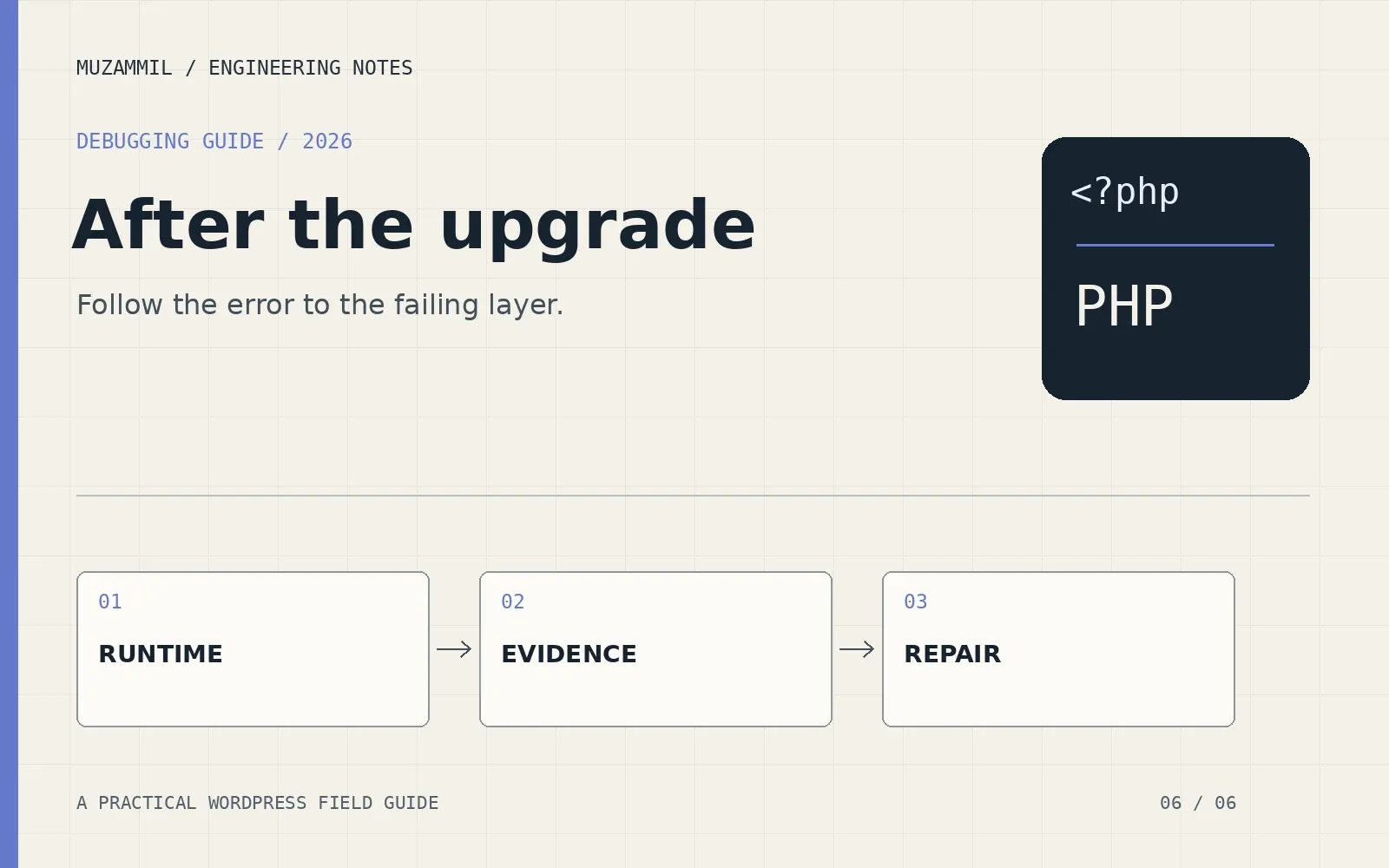
WordPress errors after a PHP upgrade: diagnose the failing layer before changing more
Diagnose WordPress errors after a PHP upgrade, from missing extensions and fatal errors to broken jobs, with private logging and a controlled recovery plan.
-
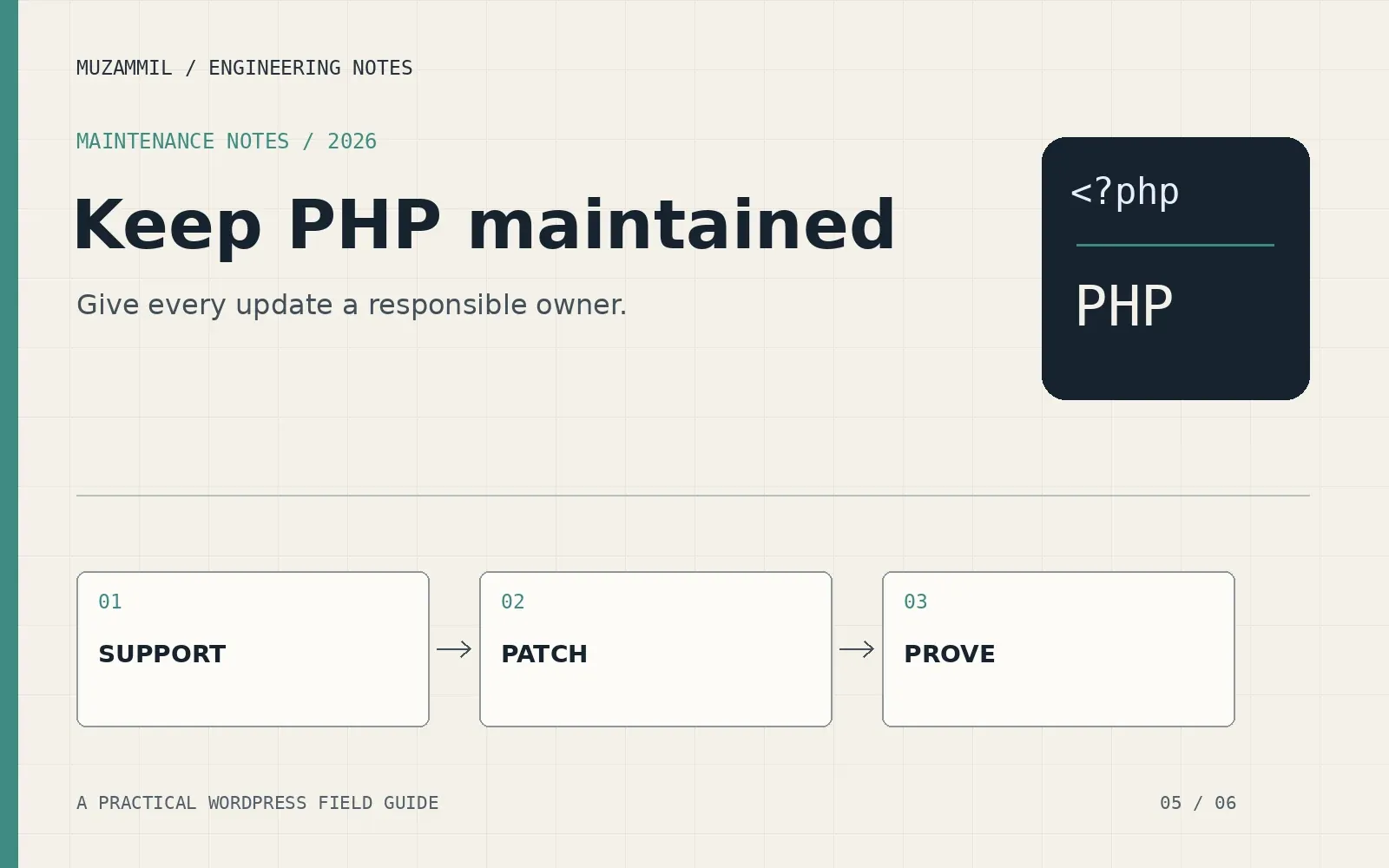
PHP security updates: what delaying a patch can cost a WordPress business
Plan PHP security updates around exposure, support deadlines and business continuity, with clear ownership, patch verification and a tested recovery route.
-
WordPress PHP compatibility checks: audit plugins, themes and the code between them
Check WordPress PHP compatibility across core, plugins, themes, custom code and server extensions, then turn scan findings into useful release decisions.
-
PHP 8.5 for WordPress developers: useful features, real upgrade decisions
Explore PHP 8.5 for WordPress development, including the pipe operator, URI tools, compatibility boundaries and the checks needed before a production move.